
Targeted intervention for hydrogen sulfide.
Bioaugmentation programmes aimed at limiting H₂S production in wastewater networks and facilities, with separate provisions for monitoring and safety.
The challenge
Hydrogen sulfide is associated with odour, equipment corrosion and serious worker hazards. Its management therefore requires more than recording odour complaints.
The biological approach
Biological intervention is considered for the conditions and organic load associated with H₂S production. Suitability is established for the specific system, without a blanket promise of zero concentrations.
The objective
Limit H₂S generation and recorded peaks, and assess the effect on treatment requirements without relaxing safety measures.
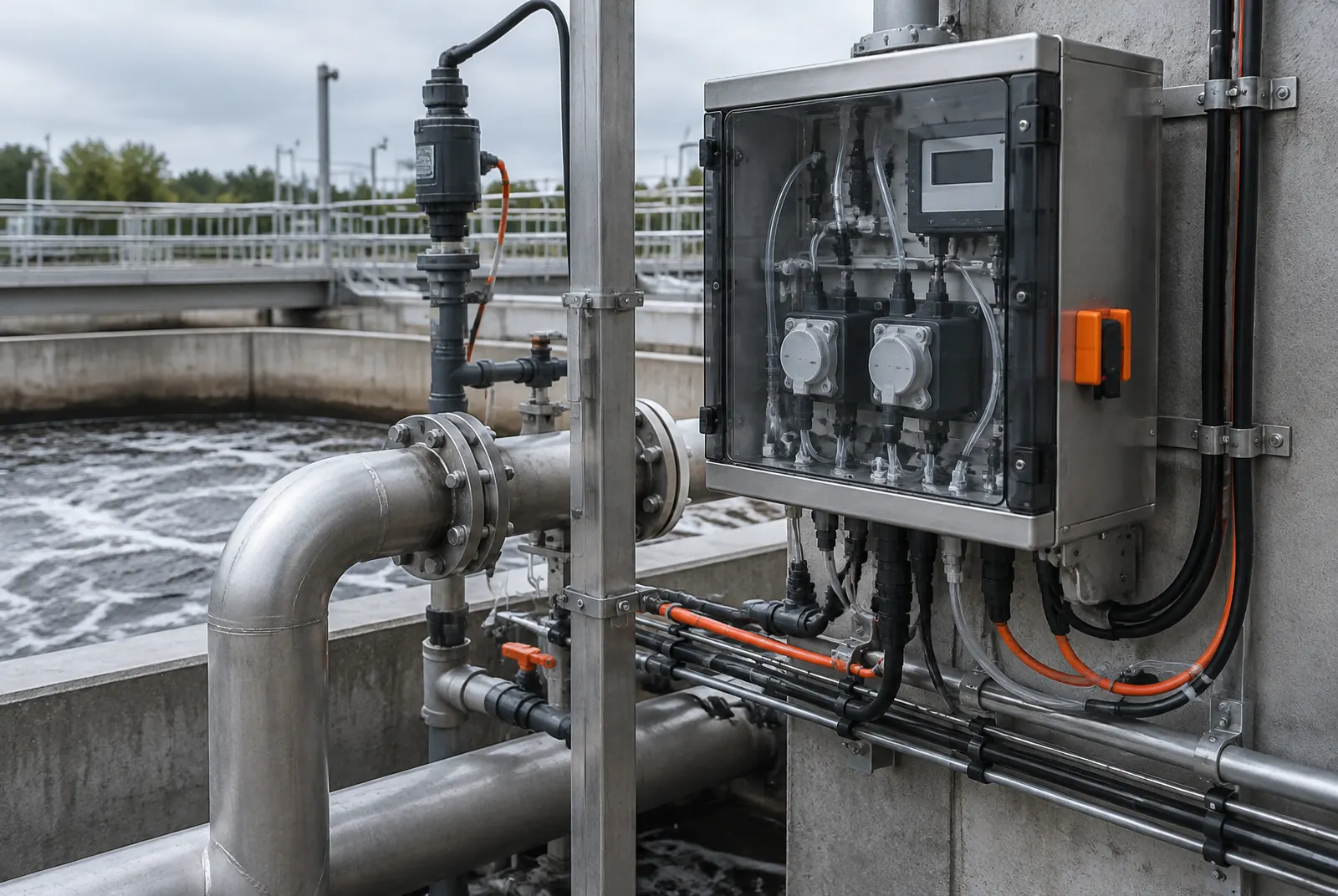 Illustration — not a BAUS project.
Where it is considered
Selected collection-system sections, pumping stations and critical wastewater inlet or treatment points.
What we evaluate
H₂S time series at agreed locations, flow and pumping conditions, concurrent interventions and downstream system conditions. Our method
Relevant research
Performance depends on the microbial approach, system and application conditions.
- R11 · Qi Z, Xie J, Jia T, Niu L, Xi J
- R12 · Yuan X et al
- R3 · Sudarjanto G et al
- M1 · Manufacturer FOG/H₂S report